( 1 ) Day went on to pioneer the use of polypropylene, a type of plastic, in his design of the now-ubiquitous Polyprop chair, which was launched by Hille in 1963. “Rare is the human backside that hasn’t found solace and support in Mr. Day’s... famous creation," wrote The New York Times when Day died in 2010.
Object MattersAn icon of British modernism.
Object MattersAn icon of British modernism.
In 1948, New York’s Museum of Modern Art held the International Competition for Low-Cost Furniture. The contest reflected an optimistic postwar belief in the power of design to improve quality of life, and saw the participation of some of the leading designers of the day, including Marcel Breuer and Charles and Ray Eames.
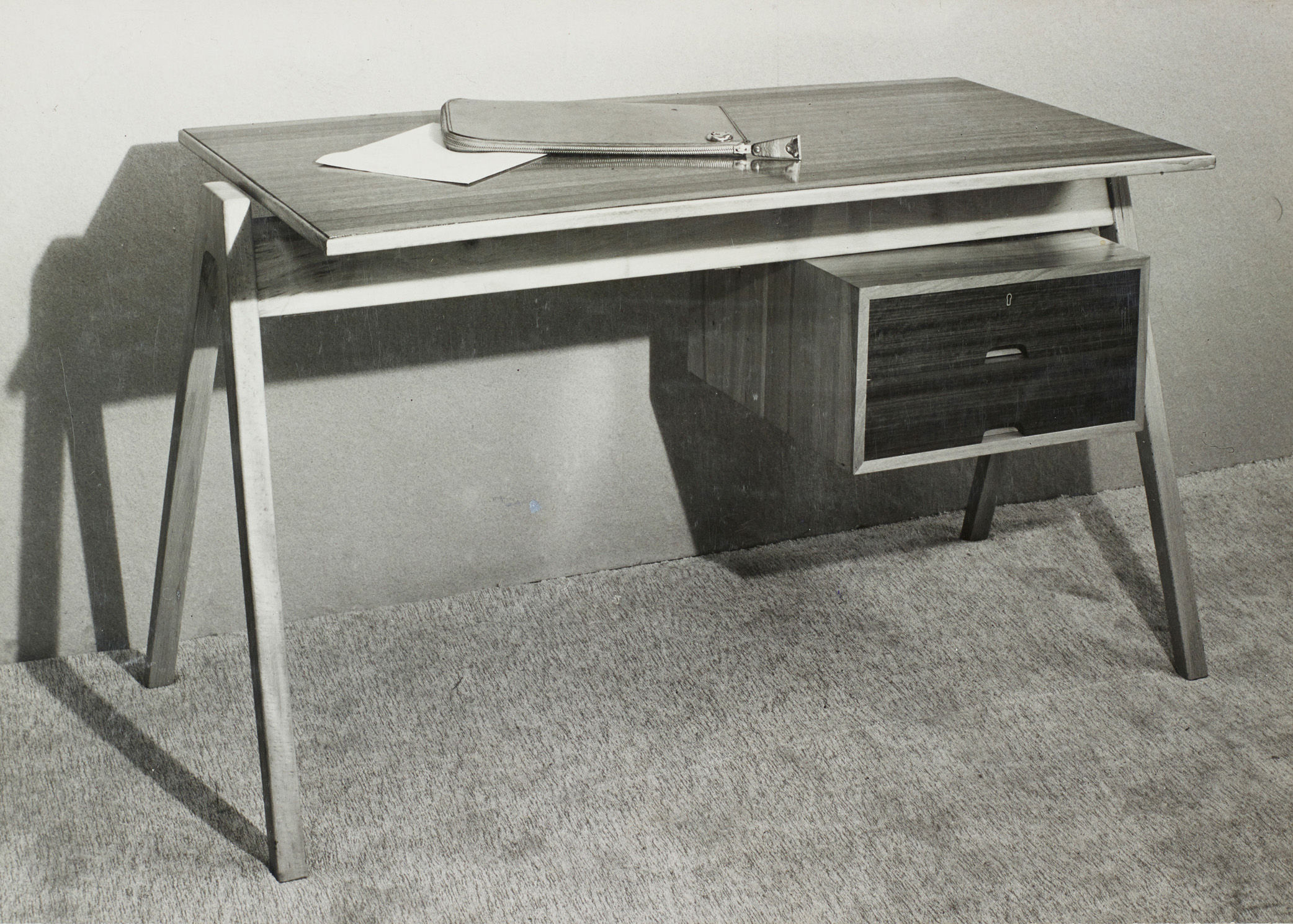
First prize in the storage category, however, went to two unknown British designers, Robin Day and Clive Latimer, for their innovative modular plywood system. The prize marked Day’s breakthrough as a furniture designer and led to a collection commissioned by British company Hille in 1951 that included a stackable chair and a streamlined desk with a modular drawer unit.
The desk, together with its complementary chair, has recently been reissued by the Danish furniture brand &Tradition. In solid beech (with the option of a Fenix Nano laminate top), the &Tradition Daystak Desk maintains the light, utilitarian elegance of the original design—including the drawer’s visible dovetail joinery and the collection’s defining A-shaped legs—but has been scaled up by 2 percent for comfort. The depth of the rails running underneath the desk has also been reduced to ensure sufficient legroom, reflecting the efficient use of materials that came to define Day’s practice.1
“He was in a way an environmentalist before the term was coined,” says Paula Day, the late designer’s daughter and the founder of the Robin and Lucienne Day Foundation. “From the beginning of his career, he believed in [making] minimal impact on the planet. He was very aware that the world’s resources were limited. And that makes him an incredibly contemporary designer by today’s standards.”