Priya Ahluwalia Meet the Londoner fashioning dazzling menswear from other designers’ offcuts.

Priya Ahluwalia Meet the Londoner fashioning dazzling menswear from other designers’ offcuts.

  • Words Fedora Abu
  • Photography Annie Lai

“I’m never going to tell a single mother with two children not to buy fast fashion, because it’s so much more convoluted than that. It’s not the customer’s responsibility—it’s the company’s.”

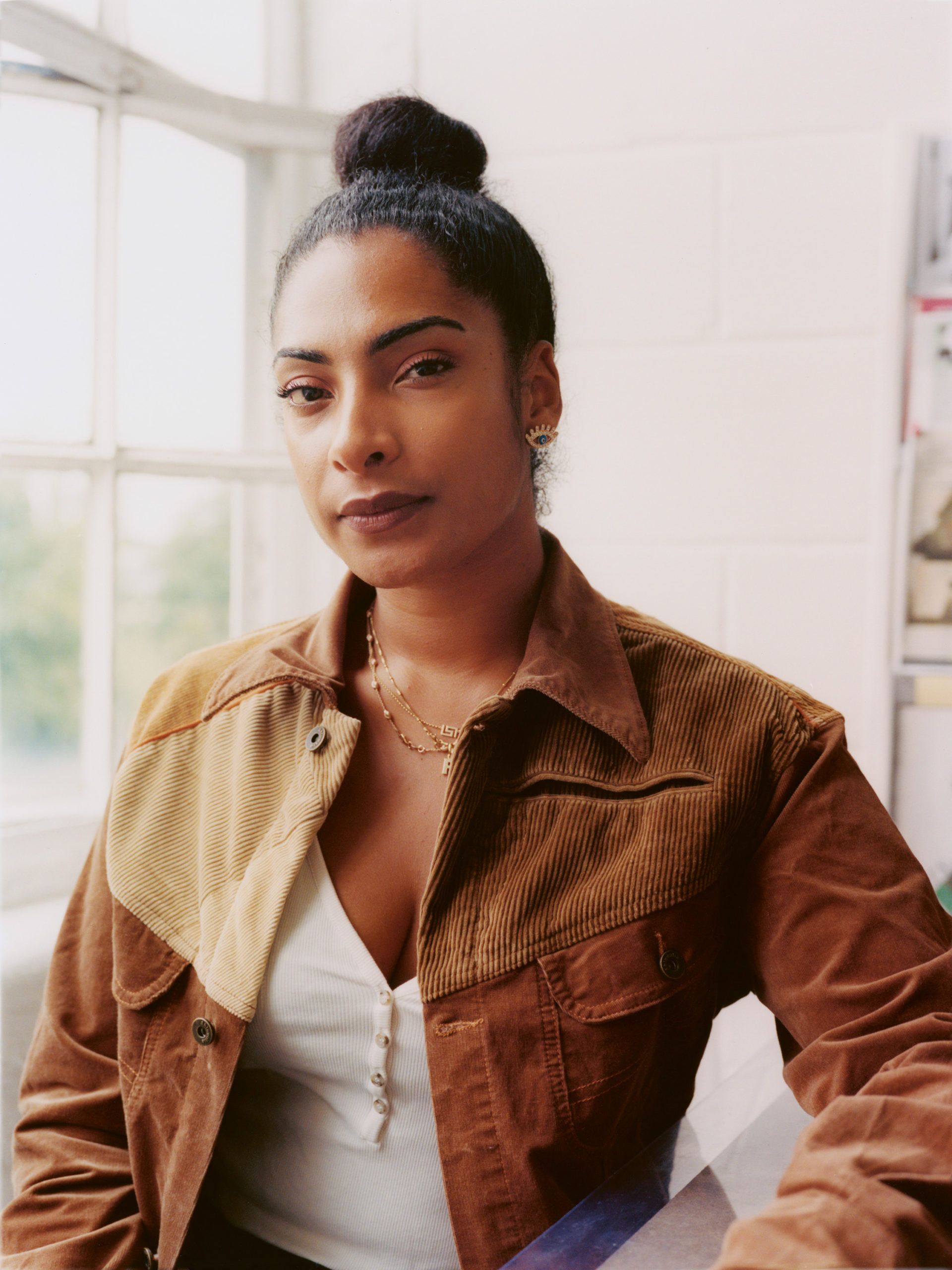
2020 marked even more of an upheaval for Priya Ahluwalia than for most. In April, the London-based menswear designer was a joint winner of the LVMH Prize alongside seven others, after it was announced that the award would be shared due to the economic strain faced by young designers during the pandemic. While finalists for the prize—which has helped launch the careers of Simon Porte Jacquemus and Grace Wales Bonner—can typically expect a barrage of press trips and photo shoots, the worldwide standstill meant back-to-back interviews over FaceTime and Zoom instead. The exhibition Ahluwalia had planned to accompany her new photography book, Jalebi, now sits online in a VR gallery.

It seems unlikely that any of this will stand in the way of the 27-year-old’s ascent. The fashion industry is currently facing a reckoning, with its biggest names being accused of racism and elitism, and ongoing investigations into fast fashion supply chains. Ahluwalia’s brand, meanwhile, represents an approach to luxury that feels fresh and inclusive. Since graduating with an MA in menswear from the University of Westminster, the designer has carved out a space for herself with her sustainable use of deadstock fabric (leftover textiles discarded by other fashion houses) and striking imagery that reflects her Indian-Nigerian heritage. As part of her prize, she’s set to receive mentorship from a selection of fashion stalwarts—but it’s this self-aware upstart who looks to be forging a blueprint for her old-world peers. 

Your heritage and childhood memories play a big part in your work. What sort of fashion imagery do you remember from growing up?
I used to watch a lot of music videos on MTV Base at my house, and I loved looking at the graphics, the fashion, the cinematography. I also grew up around different cultures. On the Indian side of my family, if there was a wedding, it was a big extravaganza where you’d go to Southall to get an outfit. Likewise, on my Nigerian side, if there’s an engagement party, the bride and groom will decide on a fabric for their side of the family and then you can basically order that fabric and get something made. Growing up, I was used to getting dressed up properly.

You’ve visited both countries many times. How have they inspired your work?
It’s inspired everything! In India, there is a massive push for supporting local artisans. You see so many beautiful textiles and techniques, and there’s just a vibrancy and an energy—the hustle doesn’t stop. It’s the same with Lagos in Nigeria—it’s such a vibrant, busy city. In both countries, I could be looking at what they’re selling in the markets, what people are wearing, or it could even be down to something like the color of sand.

What was it about menswear in particular that initially excited you?
There’s just so much that’s been done in womenswear, whereas men have been wearing the same clothes for about 50 years, so there’s scope to push the boundaries.

Do you get a lot of women who buy it also?
Yeah, loads of women wear it. I wear it all the time. I got tagged in a picture of IAMDDB wearing a full look from SS20, and that was amazing. A lot of people have asked me to do womenswear, so it’s definitely going to be coming out of the brand soon.

Ahluwalia started her brand from a spare room in her parents’ home in south London. Earlier this year, she moved operations to her first studio (pictured right): “I was outgrowing it,” she says.

JALEBI by John Clifford Burns

In June 2020, Ahluwalia published Jalebi—her second, limited-edition photography book. Working with photographer Laurence Ellis, Ahluwalia explores what it means to be a young mixed heritage person living in modern Britain and the ways in which her own background has influenced her creative output. The publication also includes old family photographs and extracts from an interview Ahluwalia made with her grandmother about the family’s experience between India and the UK.

What are the challenges of only using deadstock fabrics? Do you ever find it limiting?
The hardest bit is falling in love with something and struggling to find more. For example, I developed my SS20 collection last summer, when there was loads of light gray tracksuit around, and then when it got to production and I was trying to source it in September, everything was black and navy. It was a nightmare! And yes, there are limitations but at the same time, you can make anything from anything. You just have to be a bit more creative in how you can make something look fresh.

You’re often labeled a streetwear designer. Do you think that’s accurate?
I hate the word streetwear, to be honest. I think it’s the same as the word “urban”—you basically get called a streetwear designer if you’re Black. I’ve done a couple of tracksuits, but I also do loads of tailoring and beading and knitwear. I feel like it’s one of those things that we say that’s just quite lazy.

The world of fashion has faced accusations of racism, elitism and exploitative supply chains this year. How are you feeling about the industry and where your label sits amid all that?
[The idea of luxury fashion being elitist] is something I’ve grappled with myself, because I want to design nice stuff that’s beautifully made, and that people will keep forever. What I take issue with are the brands that sell clothes super cheaply; that to me is more “exclusionary”—not for the customers, but for the people that have to bead that fabric, dye that fabric, sew that fabric, ship that dress. It actually infuriates me. At the same time, I’m never going to tell a single mother with two children not to buy fast fashion, because it’s so much more convoluted than that. It’s not the customer’s responsibility—it’s the company’s.  All I can do is try and make sure my business isn’t complicit.

You’ve just moved into your first studio. Are you happy to finally have your own space?
For the past two years, I’ve been working from my family home in a spare room that I converted into a studio.  I’ve got a great family that’s supportive of me and I’ve been able to save on rent, and I’m really grateful for that. But at the same time I was outgrowing it. And it was impossible to find a balance: My intern and studio manager would leave, and I’d still be working until 10 p.m. I’ve recently moved into a new space that’s really spacious, with great lighting, and it just feels like the next stage for my business. I’m happy that I now have a place to work, and then I can go home and switch off.

You’re known for your use of deadstock fabric. Do you tend to seek out specific textiles, or use what you find as a jumping-off point?
It’s a mixture of both. Some seasons, I know I want to use corduroy or camel or denim, and so I’ll seek out something. Other times, I’ve gone and looked around at stuff and then been like, “Okay, this could be quite a moment.” I like the surprises that come with not necessarily knowing the plan from start to finish.

JALEBI by John Clifford Burns

In June 2020, Ahluwalia published Jalebi—her second, limited-edition photography book. Working with photographer Laurence Ellis, Ahluwalia explores what it means to be a young mixed heritage person living in modern Britain and the ways in which her own background has influenced her creative output. The publication also includes old family photographs and extracts from an interview Ahluwalia made with her grandmother about the family’s experience between India and the UK.

FREE PREVIEW

Take a look inside Issue Sixty

You are reading a complimentary story from Issue 38

Want to enjoy full access? Subscribe Now

Subscribe Discover unlimited access to Kinfolk

  • Four print issues of Kinfolk magazine per year, delivered to your door, with twelve-months’ access to the entire Kinfolk.com archive and all web exclusives.

  • Receive twelve-months of all access to the entire Kinfolk.com archive and all web exclusives.

Learn More

Already a Subscriber? Login

Your cart is empty

Your Cart (0)