SAMIN NOSRAT
- Words Ruby Tandoh
- Photos Aya Brackett
The beloved chef’s new chapter.
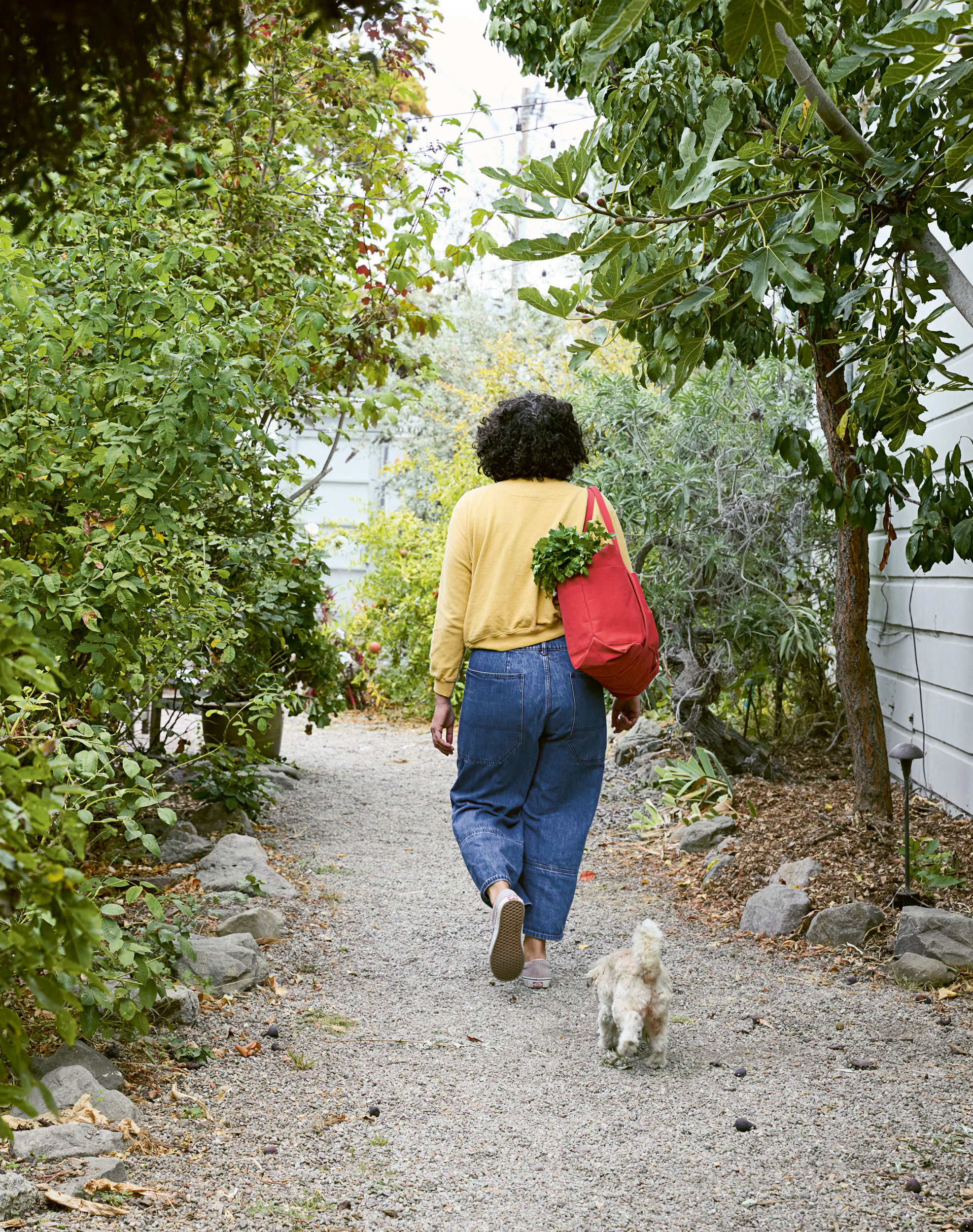
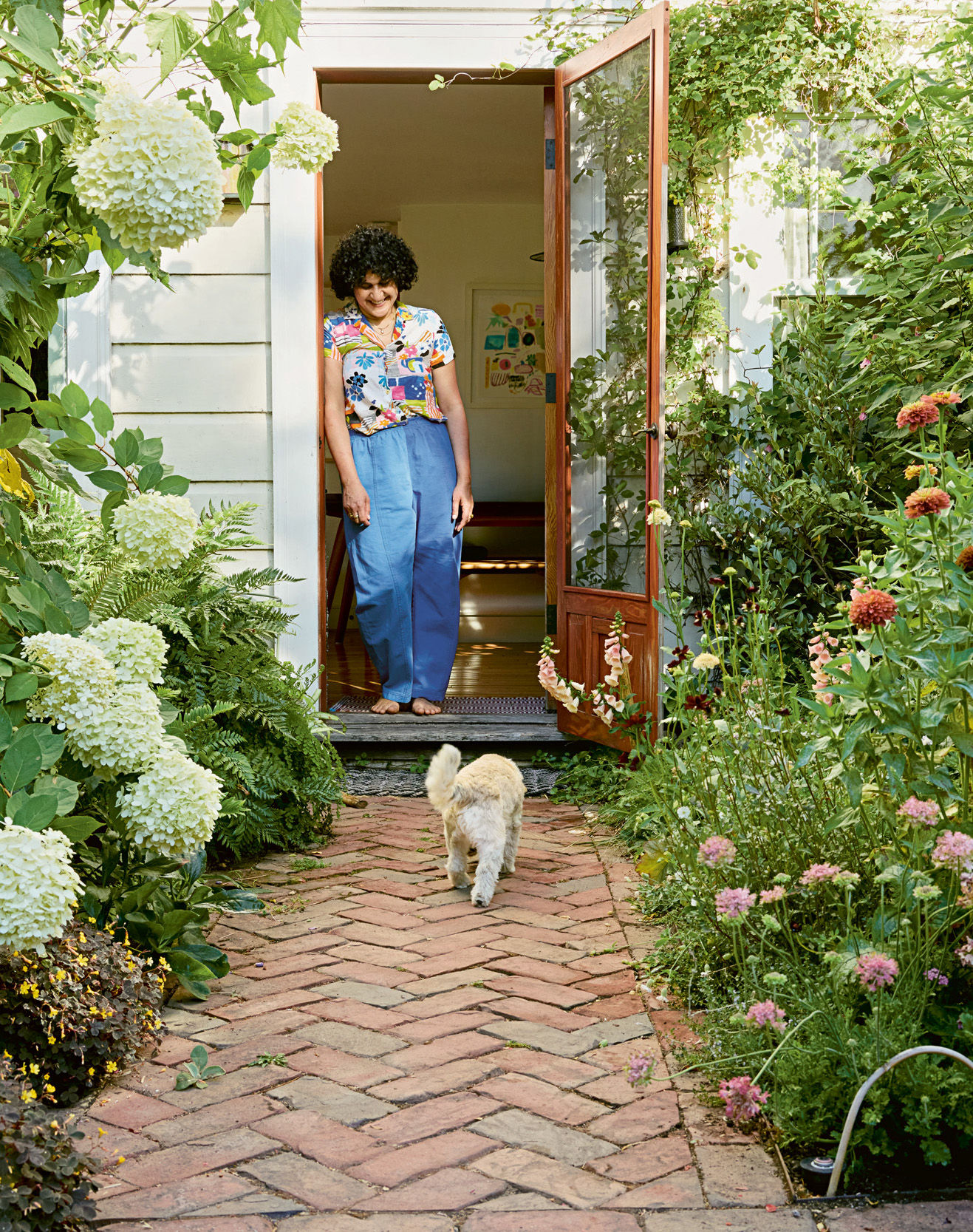
Nosrat and her dog, Fava Bean, at home in Oakland, California.
Almost as soon as Salt, Fat, Acid, Heat was published, people started dropping Samin Nosrat’s name in kitchens and over dinner tables. Whereas once, they might have asked if an apple pie was Julia’s recipe, or if you had tried the latest from James Beard, now, they referenced Samin, who seemed to be both friend and culinary sensei to everyone who came across her work.

Nosrat’s career started at the iconic Chez Panisse in Berkeley, California, under chef Alice Waters, before taking her as far as Italy and to working with journalist Michael Pollan on his book Cooked. She could have become a chef’s chef, but instead has become an advocate for making cooking as intuitive and as accessible as possible.
It’s now been eight years since her debut cookbook, and seven since the popular Netflix show it spawned—a period defined by personal loss and in which she’s been wrestling with writing her difficult second cookbook. She has emerged from the struggle with Good Things—a meditative book that reconsiders not just what cooking, but also what cookbooks, can be.
Ruby Tandoh: Let’s start with the title, Good Things, which comes from a Raymond Carver quote: “Eating is a small, good thing in a time like this.” How did you land on the title?
Samin Nosrat: I was going to call it “Happy Cooking and Eating,” which is how I always sign my books. That was the name for a long time, but I always had to explain it. Plus, I had become this kind of avatar of joy, and I don’t feel very joyful a lot of the time. Something about it just didn’t feel right. So I had been trying to think of a new title for a while. Like all writers, I have lists of quotes, and in desperation I looked through them and found that Raymond Carver quote. [The cookbook contains] these good things that I’ve collected that I have always loved and want to share. I have been in this place of so much grief and so much loss—as a lot of people have, whether it’s big loss and big grief, or little loss and little grief. Carver says, “Eating is a small, good thing in a time like this.” I feel like it’s always a time like this.
RT: How did you find it, getting back in the saddle after such a blockbuster first book?
SN: I somehow survived this massive tsunami of attention and praise and everything coming at me. I’d think: I hate food, I’m never going to eat in a restaurant, I’m never going to write anything again. But I keep coming back to food. It is meaningful to me. It’s a source for storytelling, for connection, memory, nostalgia—all these things. I tried to find a way to make something that focuses on that and shows people that it doesn’t have to be the grandest statement or performance. My British publisher said something really sweet: The first book was from the head, and this is a book from the heart.
RT: In the book there’s an idea of not just conviviality, but a more fundamental emphasis on community—especially in the communal dinners you hold. How does this inspire you?
SN: Monday dinners became, in a way, the emotional core of the book. I live on a property with four homes that share a central courtyard. It’s not a commune but we definitely have a lot of shared time and space and resources. Proximity and time have created something really special between us, and I think that we do all have a common interest in what it means to live communally in different ways.
RT: How do you feel about returning to more conventional recipes, after the skeleton key approach of Salt, Fat, Acid, Heat?
SN: I wrote an entire book to teach how to cook without recipes, so it feels very disingenuous to follow that up with a book of recipes. But I have seen over and over again that I can teach as many ideas as I want, and still the very first thing that people ask for is a recipe, because they need a place to start. My British agent said to my American agent one day: “I don’t know why Samin makes everything so complicated. She could just write a book of recipes.” And I was like—“Why would she suggest such a horrible thing? I would never do that. It would crush my soul. I would never, in a million years, do that.” And then one week later, I was standing in my kitchen making this cabbage slaw, and I just thought: “God, it’s so good. If only I had a way to share this.”
RT: How would you like people to engage with the recipes included in Good Things?
SN: My hope is you try it once and then go your own way. I want you to feel held, like I’m holding your hand. I totally do not have a straight, forward-thinking brain. It hurt to think that I would work hard to come up with these salad dressings that I love so much and I use all these different ways, and then tell you—“Oh, this is the one salad dressing for this salad.” No, no, no. I want to open your eyes to possibility, and I tried really hard to figure out different ways to do that.
“I keep coming back to food. It’s a source for storytelling, for connection, memory, nostalgia.”
RT: What has this book changed about how you think about food?
SN: A huge part of making this book and becoming more comfortable as a public resource has been a deprograming from my professional restaurant career, and specifically from Chez Panisse. I say that with great love and respect for all of the things that I learned there. But those things make sense inside of a restaurant, and specifically inside of that restaurant, not at home, not at my home.
In terms of what ingredients I consider good or bad, these days I have a deep and abiding love of onion and garlic powder. I’ve never seen those in Chez Panisse. I still have insane things that I do that I would never suggest other people do. I do them for the sake of delight. That is part of who I am. If it brings you joy, do it.
RT: Salt, Fat, Acid, Heat was far-reaching, even encyclopedic, whereas Good Things feels more intimate. Is this food a reflection of you, as a cook, in real life?
SN: These are the things that I kept coming back to over and over and over again. So many people publish beautiful cookbooks, and you’ll open them up and there’ll be a recipe for braised chicken with pureed parsnips and a horseradish salsa verde, or whatever, and it’s a three-component dish. And I do not cook like that at home. I’m like, “Is this what people want and need?” I don’t know how to give them this—I can only share with you the stuff that’s in my actual life. The project for me, in all of the writing and everything I make, is learning that whatever I am is enough.