Shelf Life The rise and rise of design objects.
Shelf Life The rise and rise of design objects.
1. The increased number of people who rent rather than own property has contributed to the boom in design objects. According to market research firm Mintel, whereas homeowners invest in big-ticket items, such as sofas, renters spend their disposable income on small objects that can travel with them.
2. The ability to source near-identical objects has contributed to the global homogenization of interior design. In an influential 2016 essay for The Verge, writer Kyle Chayka coined the term “AirSpace” to refer to the eerily similar style of hospitality ventures around the world.
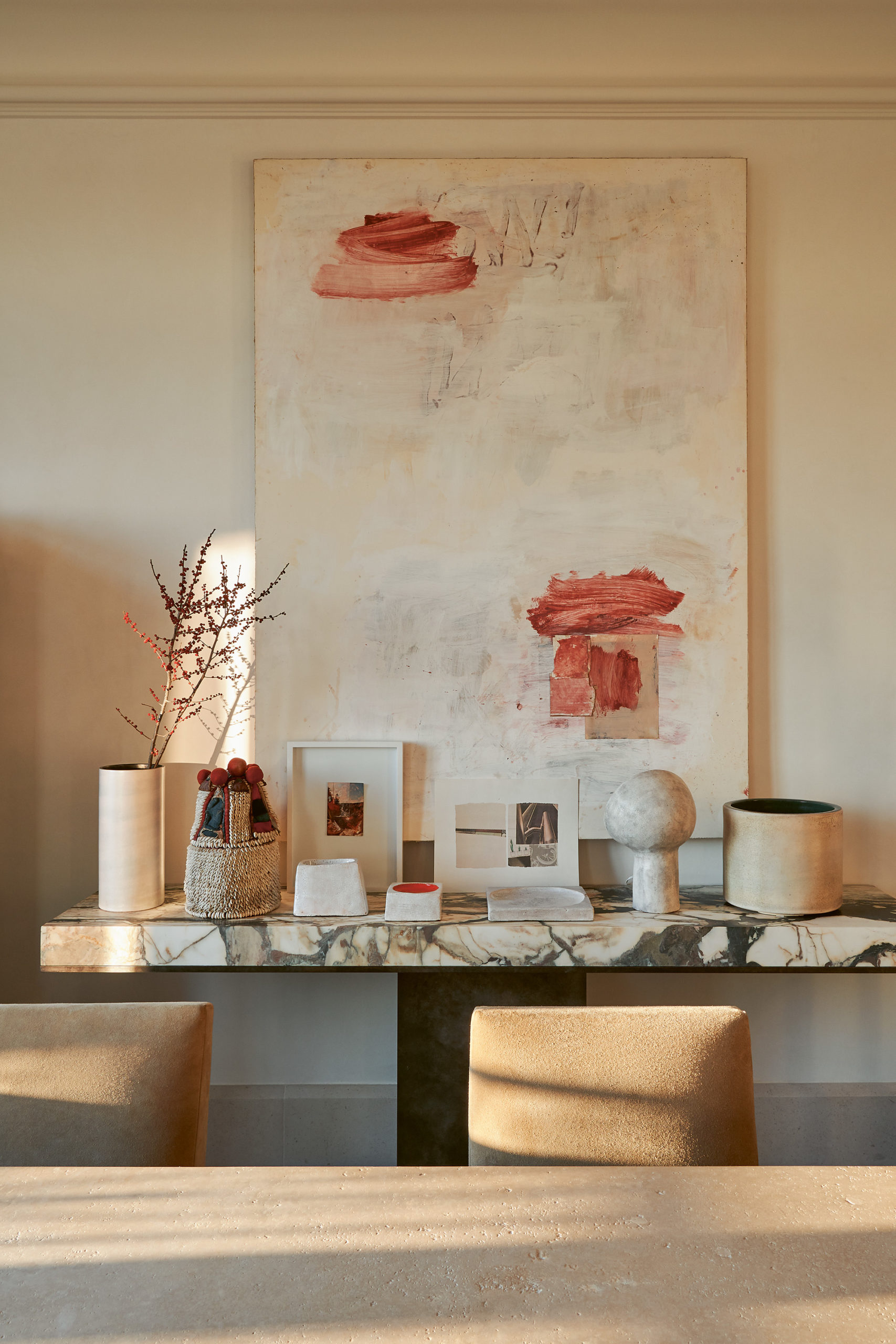
Historically, people have filled their homes with an assortment of objects that are both practical and personal: vinyl records, CDs, DVDs, books and photo albums. Today, as most of these taste signifiers have come to be consumed and stored digitally, more fluid, temporary interior design objects have swept in to fill the gap. Depending on your tastes, these might include rose-gold pineapples, drink trolleys, a bust sculpture, tiny vases or display trays—objects that don’t reveal personal preferences but rather convey identity based on in-group status. They’re objects that say, I’m in on the trend, while also, crucially, being swappable, as both trends and personal desires change.
“There’s something interesting about the home being a space you actively ‘edit,’ with changeable, updatable vignettes, a constant work in progress,” says Antonia Ward, global director of advisory services at Stylus, a trend-forecasting agency. She chalks it up to the “Instagrammification of our habits and habitats” in which “you can curate a corner of a room and photograph it… no one need see the terrible piles of laundry just out of shot.” 1
But today’s “editable” objects, in many ways, serve the same purpose as the Victorian pinned butterflies or CD towers of yesteryear: They provide memories into which we might dip. The difference is these memories aren’t necessarily our own. “We are very quick to add nostalgia these days, including fauxstalgia, which is the nostalgia for a past you didn’t even experience,” says Ward. With all those knockoff Eames chairs and plywood credenzas waiting for us on Wayfair, we can so easily join the throngs who want to live the mid-century-modern life, despite having been born well after the mid-century. We’re also not hemmed in by what we might buy based on where we’ve been. Persian rugs don’t have to come from Iran; they can come from Amazon. Turkish tea sets can be bought on Etsy. We can order anything we like, which means we can curate memories without experiencing them. 2
A few “collectible,” personal objects remain popular. Books, especially, continue to exist as status symbols and as repositories of memories. There have been some trends that reconfigured their presentation—for example, turning them so the spines face the wall. But this suggestion, advanced by Instagram interiors bloggers, was widely received with ridicule for robbing our homes of one of the few personal, physical items left. According to Ward, the showcasing of books implies, “‘Maybe I will read this again’; ‘One day I might look something up’; ‘I might lend this to someone’; ‘I’m hoping to finally cook that complicated recipe.’”
Ultimately, the objects we display are portals to all sorts of imagined realms. They “can be used as totems or touchstones to draw you into a story, to transport you to another time or place through the locus of that object,” wrote Alexis Lloyd, a product designer, in The Atlantic. While even a rose-gold pineapple can be, perhaps, personally meaningful, what happens to the attached memories when you toss it for the next trendy thing?
1. The increased number of people who rent rather than own property has contributed to the boom in design objects. According to market research firm Mintel, whereas homeowners invest in big-ticket items, such as sofas, renters spend their disposable income on small objects that can travel with them.
2. The ability to source near-identical objects has contributed to the global homogenization of interior design. In an influential 2016 essay for The Verge, writer Kyle Chayka coined the term “AirSpace” to refer to the eerily similar style of hospitality ventures around the world.