Clock Design: Isabel Lea
( 1 ) The meter was originally defined by the French National Assembly in 1791 as one ten-millionth of the distance from the equator to the North Pole along a meridian passing, of course, through Paris. Since 1983, the meter has instead been defined as the distance light travels in a vacuum in 1/299,792,458 of a second.
Special MeasuresWhen days turned into weeks.
Special MeasuresWhen days turned into weeks.
In 1793, nine months after Louis XVI was executed, the revolutionary leaders of France’s National Convention formally adopted the French Republican calendar. It was a period marked by violent revenge for social injustices and utopian visions of reform, and the new calendar was an attempt to liberate the flow of time itself from the shackles of the ancien régime and the church. The old Gregorian calendar, with its Catholic feast days, was replaced by a new system organized around agriculture, natural law and the decimal. The months were given new names—Floréal, the “month of flowers” (late April and early May) and Fructidor, the “month of fruit” (late August and early September), for instance—and were subdivided into three 10-day weeks. Laborers of the time complained that décadi, the tenth day of the week, marked for rest, came less often than the Sundays of the past.
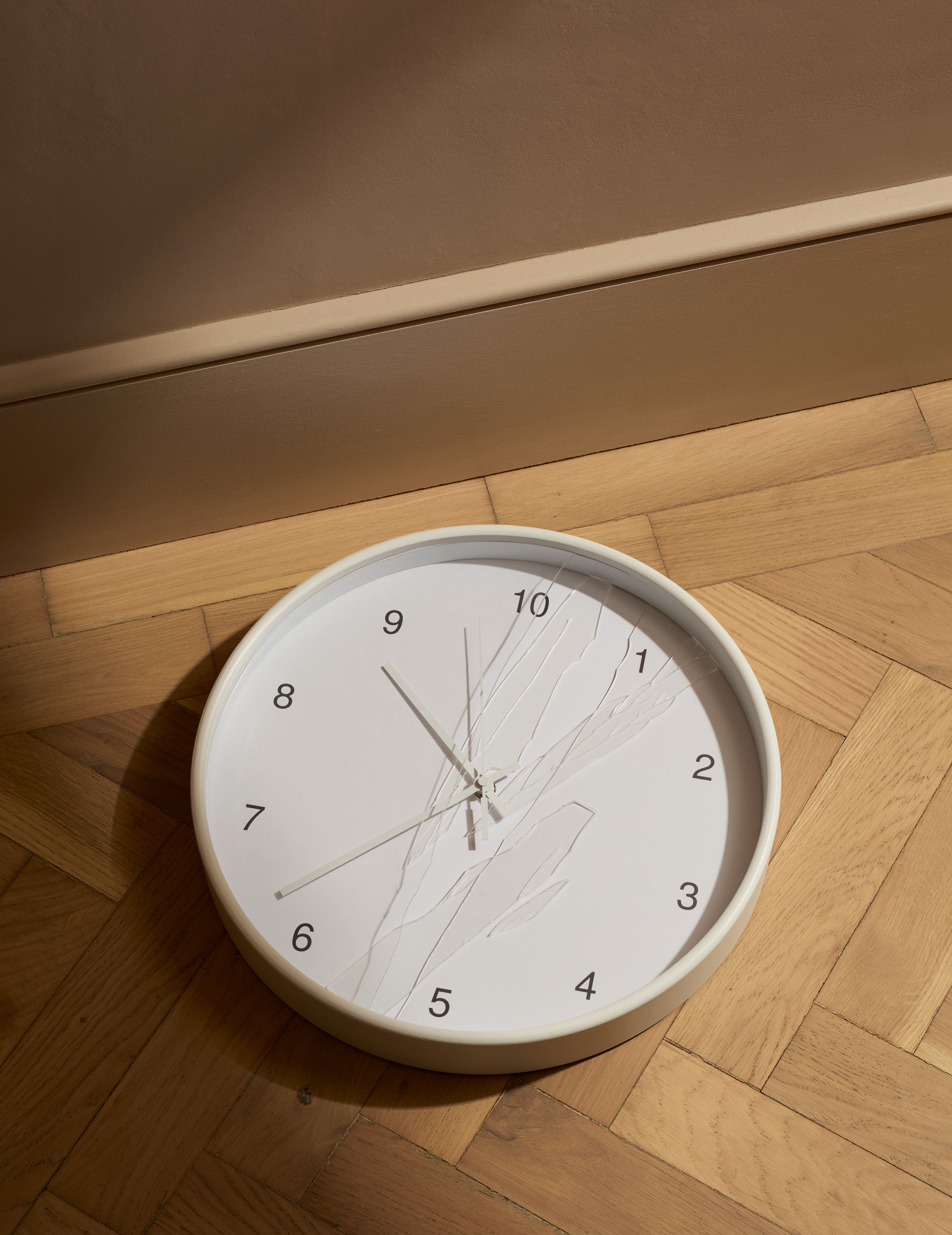
With a new calendar came a new clock. Decimal time, introduced toward the end of 1793, similarly broke the day into 10 hours. Each of these hours contained 100 minutes, with each minute containing 100 seconds—meaning that a French revolutionary hour was about 2 hours and 24 minutes in standard time, while the revolutionary second was slightly shorter than it had been before—about 0.86 standard seconds.
Decimal time had already been in circulation as an idea among Enlightenment-era thinkers (Diderot included an entry on it in his Encyclopédie), and its establishment came amid a broad push to order weights, measures and currency according to the metric system. In theory, applying the idea to time would be a bureaucratic and statistical boon. It would be quite easy, for example, to calculate 60% of a day (6 hours), and times could be given in decimal form without calculation: 1.2345 decimal hours is the same as 123.45 decimal minutes, or 12,345 decimal seconds and so on.
Ideological pressure forced some to observe the system for a while, but it remained, for the most part, a matter of onerous conversion, rather than a liberator of habits. In 1795, after about 17 (standard) months, enforcement of decimal time was abolished. The revolutionary calendar lasted a bit longer, with Napoleon discarding it in 1806, just over a year after his coronation as emperor effectively ended the first French Republic.