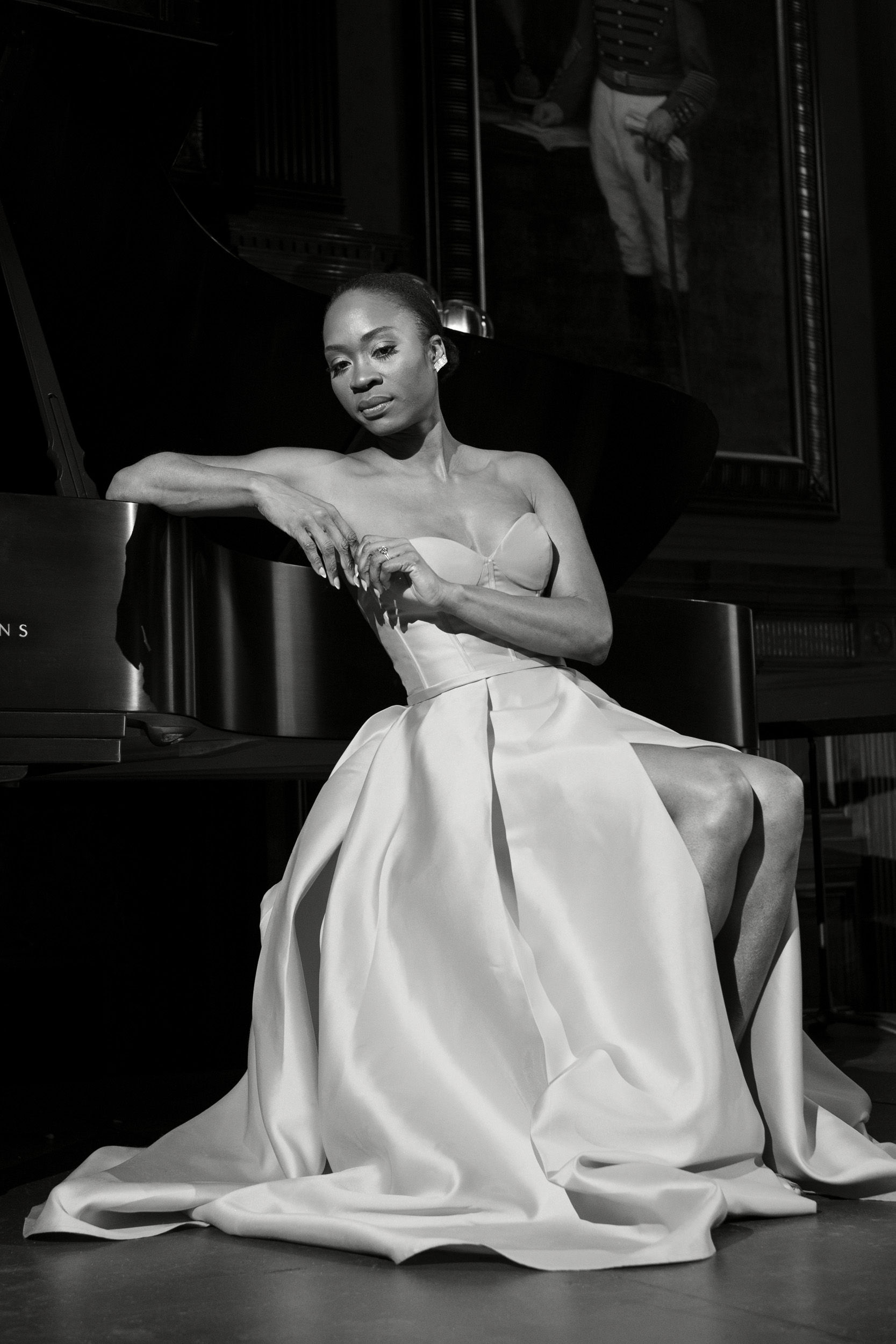
What Are You Working On? Opera singer Jeanine De Bique.
What Are You Working On? Opera singer Jeanine De Bique.
Opera singer Jeanine De Bique is supposed to be resting her voice when she answers our video call from sunny Barbados. “Giving myself to the people in the audience is healing, but it can be very draining as well,” she explains. “I try to find pockets of time where I can recuperate and be in nature and hike.” It’s no wonder she needs a pause: The formidable Trinidad-born, Manhattan-trained soprano is a rising force in the classical world, in high demand for her celebrated performances of Baroque composers like Handel.
Tara Joshi: Trinidad is a famously musical place. How did that impact your journey as a vocalist?
Jeanine De Bique: Our culture is rich with heritage, folklore, music and dance; its vibrancy lives in the blood of the people. My family is no different. My sisters took dance lessons and we all played the piano. My earliest memories are of my grandmother rocking me as a baby and singing me to sleep, and of attending church, latched around her hip while she sang hymns.
TJ: What are your plans for the rest of the year?
JDB: I start back up in August. I’m going to do a recording first, then I’ll be off to Vienna, at Theater an der Wien, singing the role of Ilia in [Mozart’s] Idomeneo. During rehearsals and performances of that, I’ll also be performing at the Dutch National Opera—it’s a pastiche, so the conductor will bring together Baroque arias from different composers to make a story. Then I go back to the Paris Opera to do Castor et Pollux by Rameau. That takes me into the new year.
TJ: How do you prepare for your performances?
JDB: Preparation for performance day starts two nights before: solid rest, lots of water and humidity, which relaxes the larynx. I wake up and have a really warm shower, do tongue exercises and drink hot drinks. Then I warm up for about 10 to 15 minutes. Of course, I still also have lessons with my teacher. It boggles my mind that there could be artists that haven’t seen their teacher in years: Singing is like the Olympics, my teacher is my coach.
TJ: To an outsider, the world of opera still seems quite inscrutable.
JDB: (Laughs) It’s like that, even for us!
TJ: Is it glamorous?
JDB: It’s far from glamorous for me. When I was awarded the Ambassador for Peace Through Music from UNESCO, I took that title very seriously. I’m from Trinidad and Tobago, and when I think about where I’ve come from, and what music has done for my community, it isn’t just a hobby for me; it’s my purpose. How can I showcase my best self, together with passing on healing messages of community, unity, diversity, beauty, color, things that are brilliant: God, joy, love? I don’t think that a dress or a pair of Swarovski crystals is going to do that.
TJ: In what other ways are you getting those messages out?
JDB: When I’m doing concerts and recitals, I’ve decided to delve into more folk songs from home. They have so much history in them, so many stories about the islands, about colonialism, about who we are as Caribbean people. I feel like even for my fellow Caribbean people, it’s important to be gently reminded where we’ve come from—to value and honor that.