What Are You Working On?Folayemi Brown’s latest venture in Lagos.
What Are You Working On?Folayemi Brown’s latest venture in Lagos.
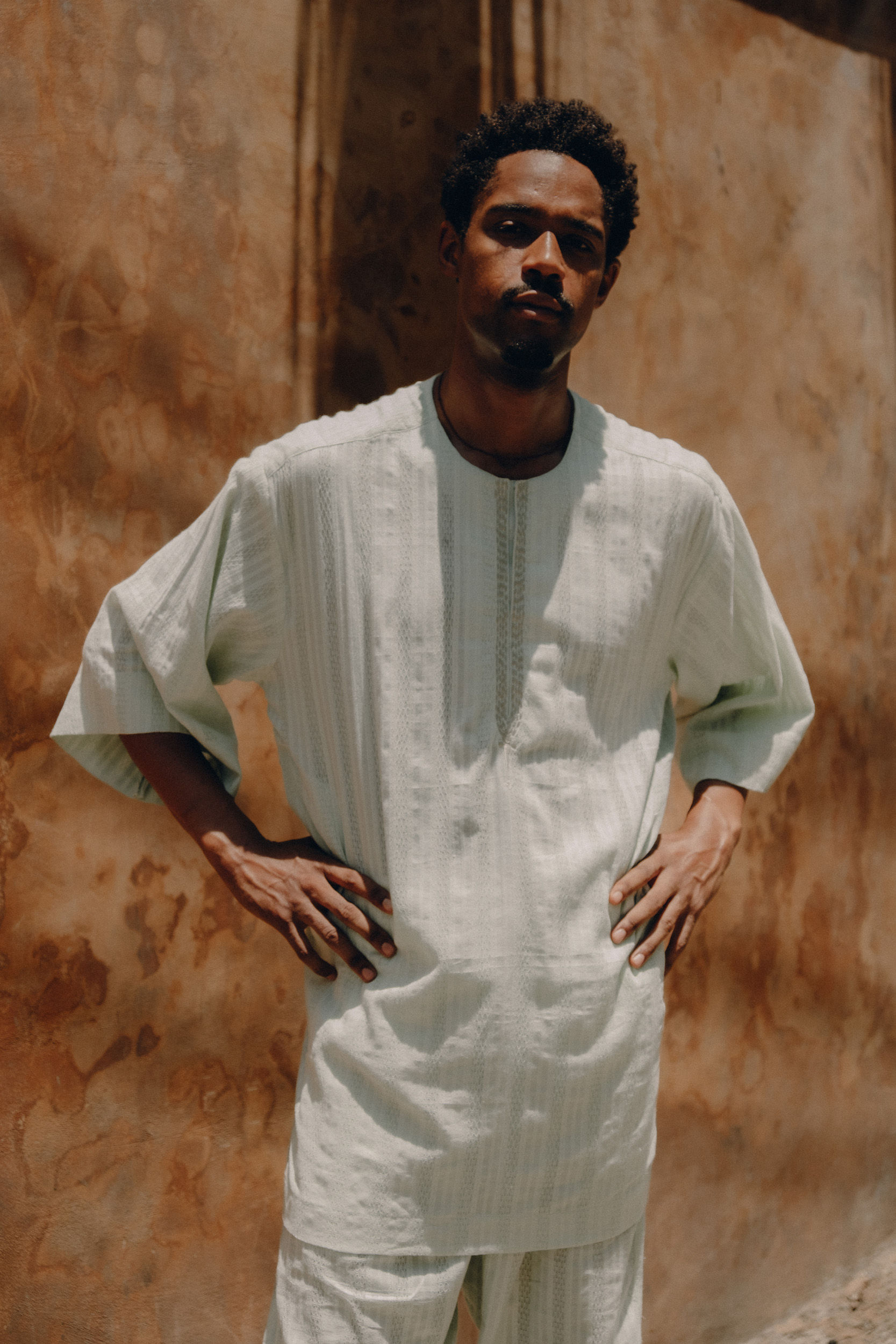
Padà Lagos is more than just a guesthouse. Situated in a restored 1950s tropical modernist building in Lagos, it is a living archive of architecture, memory and return. Its name, chosen by founders Folayemi Brown and Jacob Fodio Todd, draws from the Yoruba phrase padà wá (“come back”), signaling both personal homecoming and cultural reclamation.
The building—all but abandoned when Brown and Fodio Todd took over—was designed by British Nigerian architects John Godwin and Gillian Hopwood and was indicative of a mid-20th-century architectural style shaped by the climate and postcolonial ideals. Through the careful preservation of its original features, such as the decorative cobogó cinder blocks and mahogany staircases, and thoughtful cultural programming, Padà reanimates the building as a space for dialogue, community and reflection. In doing so, as Brown explains here, it affirms restoration as an act of resistance amid a city shaped by constant change.
Jareh Das: What sparked the idea for Padà Lagos?
Folayemi Brown: It was a matter of timing. Jacob and I were both reaching the end of separate chapters and felt ready to collaborate again. We set aside a week in early 2022 to explore ideas, and Padà emerged almost immediately and fully formed. It felt like the ideal vessel for our shared experiences, values and ambitions. That conviction has only deepened with time.
JD: What gap does Padà fill in the city’s cultural and social landscape?
FB: Our guesthouse provides a soft landing for those visiting or returning to Lagos, complemented by personalized recommendations from our ever-evolving Padà Directory. Through our programming and social space, we create opportunities for the community to connect, exchange and grow ideas. Proposals are open to all, and we actively seek out collaborations with artists, academics and cultural practitioners.
JD: What drew you to this particular site?
FB: Padà was always going to be on Lagos Island. It’s where both of my parents were born and raised, so it’s where I’m “from-from.” Jacob also remembered it fondly from a visit back in 2013, and we agreed on the practical benefits of the location. It’s at the heart of the city, with easy access to all areas, surrounded by deep history and culture. This is where I was destined to be—it made sense on all levels. I first experienced the building on a walk with my mother. It’s on a quiet street, nestled under a natural ebelebo canopy. I was seduced by the timeless breeze-block [cinder-block] cobogó facade, but was ignorant of the building’s historical significance. It was very run-down, nothing worked, but the original features were stunning and its beauty still shone through.
JD: What did the process of restoring it involve?
FB: Listening to the space was fundamental. We had some design principles in mind—functional, beautiful, modular, low-profile, etc.—but it was important to take our time. I got a feel for several local woods and other materials, reflecting on their qualities and availability. The top floor served as a testing ground for our designs, and then we made adjustments for the other spaces. Investing in relationships with local tradesmen has been well worth it.
JD: How have your previous projects informed the vision and ethos of Padà?
FB: In London, my work consistently centered on Africa and cultivating cultural confidence. Whether through the Groundnut, MogaDisco or my teaching and coaching, a sense of community was always at the heart. All of these experiences have shaped a distinct way of living and working and what I think of now as the Padà lifestyle.