THE SCENT OF CLEAN
- Words Elle Hunt
- Photos Annika Kafcaloudis
- Set Design Stephanie Stamatis
The hidden forces—and people—shaping our idea of “clean.”
- Words Elle Hunt
- Photos Annika Kafcaloudis
- Set Design Stephanie Stamatis

SHARMADEAN REID ( Founder of 39BC ) — My idea of “clean” smells like skin after water—not soap, but that faint mineral trace where warmth meets coolness. For me, clean isn’t sterile or stripped; it’s sensual, slow and human—the scent of a body that has been cared for. I think we’ve bottled “clean” with our Sage Water—not the scrubbed-white, citrus-soaked version of it, but something older and more elemental. We’ve used petrichor, moss and salt. It’s clean, mineral and meditative. It’s linen drying on a line, touched by salt wind. The air just after rain, when the world exhales and everything is damp but alive.
Tasha Marks started out as a food historian before she founded AVM Curiosities in 2011. The company works with galleries, museums and other institutions to make use of fragrance and flavor in “multi-sensory programming.” That might mean supporting an artist to bring their work to life through the senses, or, as she discusses here, recreating a scent from the past.

Elle Hunt: How has the smell of “clean” evolved through history?
Tasha Marks: Relative to the past, we live in quite a sterile, odorless world. If you go back to medieval times, we lived in proximity to our toilets, sewage didn’t drain away from the house. Cleaning then was about removing physical dirt—the idea of cleaning surfaces of bacteria came much later, in the 19th century—and so the smell of clean would have been stuff like ammonia and vinegar. But those aren’t nice smells, so fragrance was added, which is why lemon, pine, fresh cotton and lavender have become associated with clean—it’s sort of a learned response. Today, cleanliness is the absence of a smell; there are a lot of scentless products, things that are there to remove odor. But if you go back even a few decades, there are these very strong “clean” associations with certain fragrances, and they’ve always been tweaked a little. Brands who use these scents in their products want that association with clean, but they don’t want it to be immediate: “That smells like a dirty bathroom.” The “lemon” smell of 2025 will smell different from the “lemon” from 1995, for example—they are constantly shifting the parameters.
EH: What did “clean” used to smell like?
TM: If we look at Europe in the early modern era, people didn’t wash as much. They’d use soap and water to clean their faces and hands, and wash their clothes fairly regularly, but the idea of submerging in water was seen as dangerous. It became a class divide: If you had access to clean water, you could take a bath, and that went hand in hand with lots of products and fragrances. The bath continued to be seen as an extravagance of the wealthy until at least the 1930s, and even now the language around bathing is one of luxury—we talk about taking your time, luxuriating with fragrances. These are habits that were formed in the Renaissance, when they used quite floral aromas: rosewater, orange flower blossom, lavender. Going back further still, to the Middle Ages, there was the habit of “strewing” herbs: You’d have chamomile, rosemary, thyme on the floor to walk over and release the scent.
EH: Hygiene was historically a matter of life and death. Did smell play a part in that, too?
TM: The Black Death was spread by poor sanitation, among other factors. But at the time, there was the concept of miasma—the thinking was that bad air would make you sick, and that if you could smell nice things, you wouldn’t catch the illness. Those plague doctor masks with the big beak were full of herbs. Rosemary became enormously expensive because everyone wanted it to ward off the plague.
EH: Do you have an idea of how much worse, say, 1600s London smelled compared to now?
TM: I mean, the Thames still doesn’t smell great today, but before the advent of plumbing and better sanitation, you can imagine the bodiliness of it. On the other hand, London was less busy then, there were fewer people. Now there’s pollution from cars and other smells. It wouldn’t have been pleasant, but my guess is that it wouldn’t have been as foul and disgusting as we might think. We put up with just as much today without realizing it. A century from now, people might look back and say, “God, imagine being surrounded by all those petrol fumes!”
EH: Why do we have such an instinctive reaction to bad smells?
TM: We have two different ways of processing smell in our brain. There’s the olfactory bulb, which is behind our nose and goes into our frontal cortex, and there’s the trigeminal nerve, which runs through your face. That’s responsible for noticing a lot of bad smells like rotting flesh and rubbish, things that seem dangerous to us. It’s a much more immediate response.
EH: What is the worst smell you’ve ever smelled?
TM: There’s a synthetic smell of vomit that is so disgusting, it makes you want to be sick straight away. So, yeah. Definitely don’t use that in anything.

MAYA NJIE ( Founder of Maya Njie Perfumes ) — When I think of clean smells in terms of my own memories, it’s probably the scent of the communal laundry room in the block of flats where I grew up. A mix of detergents and the cool, mineral smell of marble—specifically the type found in many 1930s apartment buildings, town halls and churches in Sweden. There was always a slightly damp freshness in the air, with hints of floor soap and washing powder. From a raw material perspective, it’s often musks that get labeled as “clean-smelling,” though musks can vary a fair bit. In my workshops, many people initially assume they won’t like musk, thinking it will be too strong or unpleasant. But they’re often surprised by how soft, comforting or subtly fresh musk materials can be. Some resemble clean skin or warm laundry, while others are more bestial and dirty. In a way, it mimics pheromones and what’s attractive is subjective. It’s never actually been proven that humans produce or respond to pheromones, but musks can feel clean, instinctive and familiar and many of us share and respond to that connection. Other materials that feel clean for me include neroli and lavender, thanks to their traditional use in soaps and colognes. Aldehyde C11 too, which smells like a freshly ironed shirt. Then there are the ozonic, aquatic and marine notes, which evoke transparency, water and air—like a breeze through an open window. In terms of my own formulas, I associate “clean” with being uplifting, energetic and easy to wear. Nordic Cedar has a brisk, open-air forest feel—clean through its clarity and cardamom-cedar freshness. Les Fleurs brings together bergamot, neroli and fig, which creates something green, nectar-like and radiant. Tobak includes a more animalistic musk, but because it also nods to classic barbershop scents, it still holds that link to grooming and cleanliness.

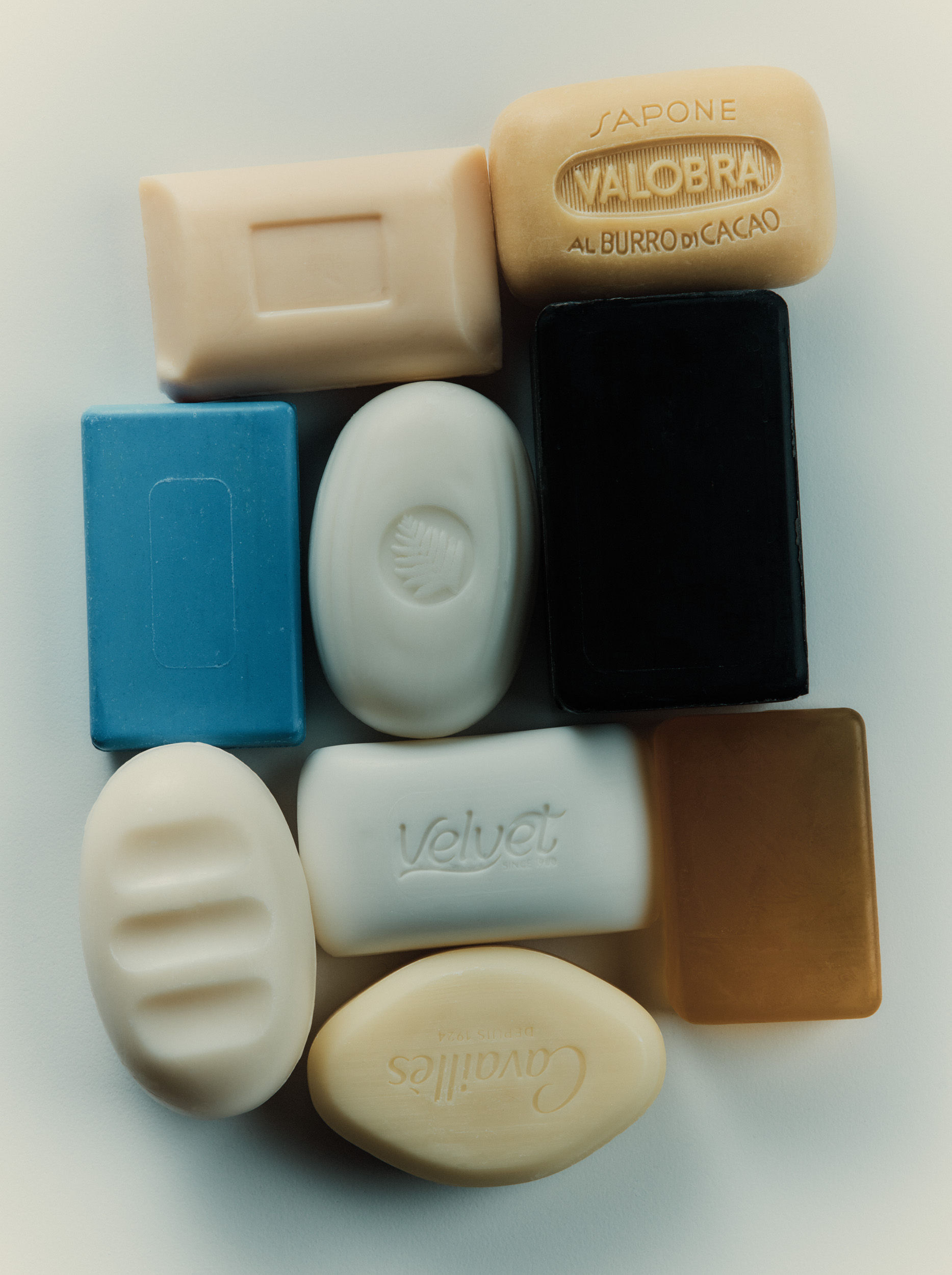
LYN HARRIS ( Perfumer H ) — The smell of someone’s skin after a shower; when I collect my washing from the roof in the summer; washing your hands with a bar of old-fashioned soap; my grandmother ironing her white sheets; my grandfather after shaving. All of these smells remind me of clean skin or clean crisp cotton, which I absolutely love. For the past year, I’ve been working on a collaboration with someone who wanted a fragrance to smell clean and they had memories of an Italian barber shop and clean cotton sheets dried with the whisper of a summer breeze.

DAVID SETH MOLTZ ( D.S. & DURGA ) — Clean smells like many things: There is natural cleanliness, things we sniffed in childhood, pure aromas and associations with products we deem clean. To me, lemon oil is probably the most basic clean smell. It’s fresh, yellow and light. Lemons literally clean germs all over the world. It must be the most important fruit on the planet. So perhaps we’re hardwired to sniff its sweet acidic song as the pinnacle of cleanliness. Water often smells clean. We are 70% water. So the same logic might follow that. Distilled rose oil also smells very clean. Rose is the dewiest flower to me, although peony is a close second. It adds magic to perfumes, “cleaning” rough edges with its power. And finally nothing smells cleaner than babies’ breath—sweet, pure, milk-fed clean.

MARIE DU PETIT THOUARS ( Founder of Maison Louis Marie ) — Clean, to me, smells like wet leaves in a forest after a storm—the quiet lingering freshness that follows after the rain. That deep, green scent when the air is heavy with rain and the earth feels alive again. It’s damp wood, moss and the faint sweetness of crushed petals underfoot. There’s something grounding about it, raw yet serene, like nature taking a deep breath. That feeling of renewal and calm often inspires my work at Maison Louis Marie, where I try to capture the purity of the natural world.